Category: Covid Times

  • Shelter In Place

    Only a few days in, I knew the whole covid thing was a lie.

    Not that there wasn’t a virus, I was one of the first people I knew who got it.

    I’m not some grand prognosticator, it’s just when you grow up with lies, like in my case where they told me that my younger brother was my uncle, among other things, you get really good at sniffing out the Truth. Or at least that’s the case with me. Some call it hyper-vigilance.

    My early tip off was three little words: Shelter in Place. If not for the fact that I’m an elementary school teacher in California, I might not have known exactly what that meant.

    Friday the 13th in March of 2020, was the last day that I saw kids at school; playing in the playground, tumbling and touching, laughing with their heads back and mouths open wide, for a long, long, while. Spring break was only a week away, and spring fever was hitting hard. The kids didn’t feel like working, and neither did I. Ms. K, the principal, called us into special meeting that Thursday after school in the library. I was thinking, really? Can’t you just send out an email or something? An extra meeting was the last thing I wanted. On the other hand, it wasn’t too often a special meeting was called, so I was somewhat intrigued.

    “The students are not coming to school next week,” she told the assembled, tired-looking teachers, scanning the room for reaction. “We are being told to close an extra week out of an abundance of caution, so that they can get a handle on this virus that is going around.”

    At first I thought she meant because so many kids at our school had been sick. Lots of kids had been sniffing and coughing right in my face, and wiping ribbons of snot on the back of their sleeves. I had been working with kids one-on-one on a computer for English proficiency, and had to keep wiping down the screen and keyboard that was sprayed with sneeze spittle. But closing the school just because some kids were sick? That was unheard of. They don’t close school for anything, as much as I wished we could have a snow day or something once in a while, but no such luck in California.

    The room full of teachers sat for a full minute of stunned silence trying to digest this news. Ms. K continued, “Governor Newsom has ordered all the schools closed in the seven Bay Area counties, due to the spread of the Corona virus.”

    Oh, that? Sure, I had heard of this Corona virus in the background of my busy days, the guy who died in China, the three or however many cases they had detected in the US, mostly by people who travelled to China. I remember people being scared to go to the Chinese New Year parade in San Francisco that past February, but I thought that was ridiculous hype, and went anyway. I had heard that a State of Emergency had been declared, but I thought, yeah, yeah, that’s how they get money. None of the talk meant anything to me until I heard Ms. K say they were going to close the school. All the schools in the Bay Area. For a week!

    My first guilty thought: we don’t have to teach next week! Yahooo! And then we still get another week off for spring break? Two whole weeks without the kids, an extra week off? I think I can speak for most teachers when I say that while I love teaching kids, the job is, let’s say, taxing. I adore kids, more than adults, but at that point in the year the extra break was welcome. I could feel this somewhat verboten thought ping-ponging around the worn-out, spring-fevered, teachers’ brains in the room. Though most sat stoically stone-faced, no one would admit the glee I think we all felt until I heard a teacher behind me whisper, “What, is this Christmas? I thought it was Easter!”

    “You will all need to report to work next week,” Ms. K went on. “We will need you to help gather materials for the students to use during the extra week they will be at home. Although the kids will not be required to come to school, they will still be considered instructional days.”

    Anybody who is a teacher knows that any kind of “work” that doesn’t involve trying to wrangle kids attention, inspire them to learn, keep them following the rules while fostering and independent spirit, making them laugh, consoling their injuries, and loving them at the same time is not work. Any kind of task on a computer screen, or talking on a phone, or doing something menial, does not compare with the spiritual and emotional effort required to turn a classroom of kids into a cohesive community. So, whatever we teachers were going to be required to do the next week felt like an unexpected vacation.

    After we were dismissed, some of the teachers buzzed in corners, and a couple of teachers in the principal’s inner circle went up to talk to her in low voices. I thought I heard her say, “Yeah, I don’t think they’re coming back at all this year.” I thought I must have heard that wrong, and put the thought out of my head as being too impossible to fathom. Only later did that overheard remark come back to haunt me.

    The next day, on that Friday the 13th there was a palpable grief floating through the kids’ collective psyche, while we teachers were temporarily psyched up. They had definitely gotten the memo about the extra week off, but I was surprised to see kids crying here and there, some clustered in small groups, their arms around each other, heads down. Kids came up to randomly hug me. It felt like a funeral. Actually, it was, but I didn’t know it yet. The kids seemed to intuit what was happening though. “Aw, come on, it’s only a week,” I said to whatever kid was acting overly dramatic, as kids tend to act.

    Monday morning, we teachers all reported to an eerily empty school void of kid-noise and energy. The bells rang anyway, signaling nothing. We were told to go through the desks in all the classrooms, and start making packets of work that the parents would later pick up. I set to work in various rooms, putting crayons in baggies, and making stacks of work and books, and packing and marking them in paper bags. About half way through the day on Tuesday, I heard Ms. K make an announcement on the loudspeaker. “Everyone is to go home. Now. Please just drop what you are doing. The governor has announced a Shelter in Place.”

    I was like, what? Shelter in Place?

    I knew what that term meant, as most teachers do, because ‘Shelter in Place’ was one of the many emergency drills we practiced with the kids every year. Fire drill, evacuate the building, earthquake drill, get under the desk, unfortunately in later years, ‘active shooter’ or lockdown drill, close the curtains, lock and block the door, and keep quiet. Shelter in Place meant do not evacuate, immediately seek shelter in the nearest building or room, and if possible seal the windows and doors and turn off any air conditioning because of immediate danger outside. The danger could be some hazardous chemical material in the air, or else severe weather. Shelter in Place is a command that is only meant to last for a few hours.

    This is where the governor made a big credibility mistake with me, very early in the game, and I never believed another word he, or any other person in the government or public health said on the matter. Immediately my hyper-vigilant brain started rapid-fire spitting out questions as it tends to do, often to people’s annoyance. Like the evil covid germs were just floating around outside in the air? Invisible spiky red balls had permeated the atmosphere? Were we supposed to hold our breath on the way out to our car? Was everybody sheltering in place? And for how long? If there was imminent danger, why weren’t we sheltering there at school? And why only the Bay Area?

    I went to talk to Ms. K, being mindful to only ask a fraction of my zillion questions.

    I remember asking her if the gas stations were open because I didn’t have enough to get home. She told me they were, and right then I thought, if we have to Shelter in Place why didn’t they? Were they risking their lives? I left the school in a daze. Not scared, just dazed and confused. I tend to get slow and calm in emergencies. Driving home I looked around outside, observing, and thought that everything looked remarkably normal. I didn’t see people dropping dead in the streets like they showed in those fake Chinese YouTube videos. I saw cars driving, some people walking around, kids playing. I stopped and got gas; the workers seemed non-plussed.

    That’s when I knew they were trying to scare us. That’s when I knew it was all hype. Everything after that day of the ‘Shelter in Place’ announcement only confirmed my suspicions. That the government would outrageously lie to the people, did not surprise me. I grew up not trusting the government since I was a little girl with my semi-hippie parents, who sent me to school with a black arm band to protest the Vietnam war, and pointed out the flag-covered coffins of drafted teenagers coming back from Vietnam on our little black and white TV. ‘Question Authority’ was a prominent bumper sticker back then, and all the rock n roll heroes confirmed that you should never “trust the man” or the guys in suits. ‘Fuck the establishment’ is what I learned early on.

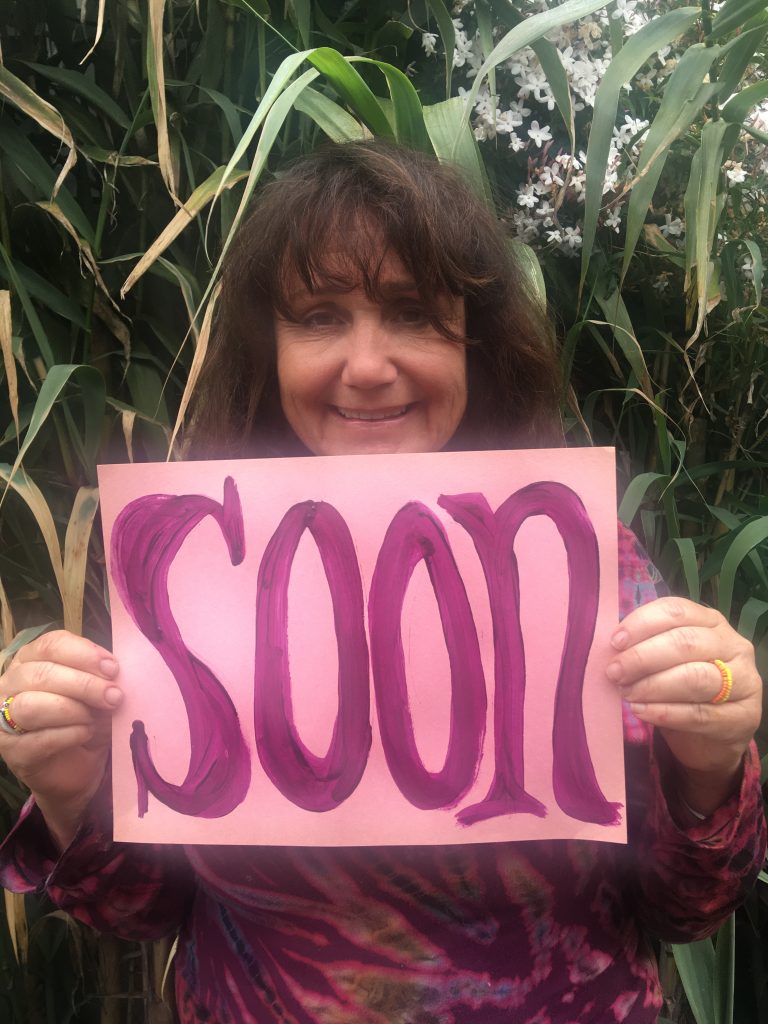
    The teachers were instructed to make one word signs, and take a selfie holding the sign. When the pictures were grouped together, it read “We miss you! We will see you soon.” I held the ‘soon’ sign. But we never saw the kids again that year, or the next. In fact, I never saw that group of kids at that school again.

  • Learning Loss Part 1

    Learning Loss:

    No one ever imagined that we would still be locked down in September.

    September means back to school. New backpacks and shoes for the kids, and we teachers sigh to say good bye to the summer, but there are fresh bulletin boards and ‘Welcome’ signs, new rosters, and classrooms that had the floors polished in the summer. September meant new beginnings, new kids, a renewed sense of purpose after resting all summer. 

    Not that year.  The schools had been shuttered since the March before when they told us all to go home.  ‘I thought it was Easter, not Christmas, I heard a teacher whisper when the principal told us our spring break would be extended another week, to two weeks, to you know, ‘flatten the curve’.  We all know the story now, yadda yadda, the kids of California never went back to the classroom that year.  Nor the next.

    I spent the last half of the 2020 school year sitting on the school yard asphalt by myself, surrounded with buckets of paint.  Most teachers had to start Zooming, but since I taught ESL that year, they told me I could just go home and collect my paycheck. The thought of getting free money for doing nothing was unfathomable to me (but I guess a lot of stuff that happened that year was) but also immoral, so I asked the principal what else I could do to help.  She gave me the perfect job of painting a giant map of the United States on the playground.

    I sat, day after day, month after month alone, painting each individual state in a color palette of my choosing, my headphones on my head tuned in to Adam Carolla, the comedian I had listened to in the morning for years. He was a voice of sanity to me, my friend. 

    School officially ended that June along with my temporary job.  Painting the map of the states had inspired me to drive across this country of ours.  I wanted to see with my own eyes what was happening everywhere else.  I was prepared to drive alone, anything to get away from the irrational craziness I saw when I wasn’t in the refuge of my asphalt canvas.  I couldn’t bear to continue to witness the lines of masked people bracing themselves against the wind to get into the grocery stores, or physically fighting over toilet paper once they got in.  I had to get the hell out of Dodge.  The fact that the unelected health officer, Scott Marrow, told us to stay within five miles of our homes made the trip even more enticing. It couldn’t be like this everywhere.  My friend Merry ended up going with me.  ‘What if we die?’ she asked me before we left.  After all, we were going into the eye of the storm, the scary states that didn’t lock down, where covid floated in the air like a thick invisible blanket, they told us, where faces were obscenely seen because of the lack of masks. “Then we die,” I said.

    We didn’t die, and I was right.  The rest of the country wasn’t like us.  They all went back to school in September, rightly seeing the insanity of keeping kids at home staring into a computer. Not California. The 2020-2021 school year was upon us, and Newsom told us the schools were not opening, we had to continue to stay home to save lives.  Remote learning they called it. It was a joke.

    I didn’t know what I was going to do, but like the school year before, providence handed me the perfect job during that second Pandemic Lockdown School Year.  A one-room school house out in the country, as though my classroom was a cross between Little House on the Prairie and Charlotte’s Web, in a rough-hewn wooden barn.

    One wall had a white board where I kept track of the fourteen kids complicated Zoom schedules, another wall had horseshoes nailed into it in such a way that the students could hang up their backpacks and coats, another wall I covered with the kids artwork, and the fourth wall was non-existent.  Like, there wasn’t one, the barn had three walls.  That meant that I had an unobstructed, open-air view of the rolling hills, dotted with horses separated by white ranch style fences, and the smell of fresh hay and manure wafted around my classroom.  The en plein air classroom was a draw for some of the parents of the students that ended up being in my ‘learning pod’ one of the pandemic concepts already fading from our collective memory, where it was said that a random number of kids, say a dozen or so, could be together and it was ‘safe’ especially if air was circulating, and boy did the air circulate there!  Most pods had to buy HVAC systems, but ours was natural.  As beautiful as a semi-outdoor classroom was, it also meant that many mornings were freezing cold, and getting the propane going on the one heater we had wasn’t always easy. Also, since we were on a dirt road, clouds of dust would float in and settle on everything whenever a car or horse went by.

    I’d gaze out at the hills and horses and tell the kids that ranged from kindergarteners through fourth grade, that they were the luckiest students in the whole state.  ‘Whoever gets their math done can go on the hayride!’  was my daily refrain meaning that some lucky kids got to ride around the ranch in the quad with Breen, my stepson, and owner of the Lazy H Ranch, and throw flakes of alfalfa in the feeding troughs. 

    One corner of the barn had eggs in an incubator at the beginning of the year, and as the months went by, we watched the chicks hatch and eventually turn into four rust-colored teenage hens.  The chickens were like our kids that we had raised.  They wandered freely around the classroom clucking softly, and some of the kids liked to hold one of them in their lap grounding them to reality while they watched their teachers trying to explain math on their laptops.  The two barn dogs guarded us, but one always was licking his chops around the chickens, and the kids would scream at him to get away, until one day the dog came in the barn and I literally saw feathers come out of his mouth, like a cartoon.  We didn’t tell the kids for days that he ate one of the hens, and I privately cried.

    After ‘school’, we’d all go up to the hay loft and watch movies on a TV, and some of the kids would jump out the opening holding a rope, and land in the pile of soft hay below.  Two giant tire swings hung in the trees further up the hill, a thrilling ride where up to four kids could comfortably sit and spin dizzily around holding on to the thick chains. The kids all got riding lessons on ponies in the coral for their afterschool program.

    I was in an idyllic world, far from the ugliness of the lockdowns and people’s reaction to them. No television blaring propaganda, no radio to tell us to be scared. All it took was a mile or two to get out of town and completely change my reality into that of country living in the old days.

    The Zoom teaching made me sad though. The Chromebook laptops were the worst part. I remember the sight of one kindergarten girl named Steele diligently doing jumping jacks solo out in the courtyard behind the barn for ‘P.E.’ while staring at the computer.  A long-awaited annual fourth grade field trip to the Sanchez Adobe was watched by the kids on the computer while they pretended that they were making the mud bricks they usually got to make with their hands. Breen’s son, Chinny, in his senior year, wandered in and out of the barn.  He usually stayed in bed until noon, watching his high school classes on his phone in bed.  He missed most of his long-awaited football season, his prom, and his graduation, although the moms tried the best they could to make facsimiles, it wasn’t of course the same, the sadness was obvious in his eyes.

    I was privy to see how more than a dozen teachers interpreted ‘teaching’ during the lockdown.   I saw some teachers showing up over the Zoom every day, well, actually only four days a week, because they called Wednesdays ‘asynchronous learning’ a euphemism in the New Speak that meant ‘you’re on your own kid, and yahoo, the teachers get a day off’.  Other teachers just directed their kids to watch videos, and sent home thick packets of busy work.  I heard one kindergarten teacher tell the kids to go outside and observe nature for their science lesson.

    That school year went by like I was in a dream.  At the beginning, in September, we survived the ‘black day’ when the smoke from the fires was so thick the sun never came out, by hiking up to the ridge with flashlights, and watched the traffic below, the headlights barely visible. We made applesauce and carved pumpkins, and Santa and the Grinch made surprise appearances at Christmas.  In the spring we planted flowers in decorated pots for Mother’s Day, and at the end we held a formal graduation, complete with graduation caps that the kids made themselves.

    The horror of what the lockdowns did to most the kids didn’t hit me until the following school year.

  • Africa (China #3)

    China #3: China in Africa

    The summer before last, way back in the time before the rug was pulled out from under us, I travelled to Africa. On my Bucket List of Life was the desire to see the elephants in their natural habitat and Kenya did not disappoint. Kenya is the home of the Sheldrick Wildlife Trust, a place to see rescued orphaned elephants being fed with gigantic baby bottles, and also Amboseli National Park, the best place in the world to get close to free-ranging elephants.                .

    Our guide on our two-week Safari was Oliver, an articulate, funny, and deeply knowledgeable Kenyan of the Kikuyu tribe who drove us three lady teachers for hundreds of miles around Kenya in a van with a convertible top. He told us about the history, customs, tribes, economy, and wildlife of the region, while navigating through sketchy roads and the open planes. I could write forever about what he taught us about Africa, but what is on my mind these days is China, and the way they are infiltrating the world.

    As we drove across country, Oliver occasionally pointed out slick, modern railway stations, some gleaming in the distance in the middle of nowhere, the modern architecture a sharp contrast to the crumbling railway stations abandoned from the colonial days. We had already seen the Nairobi Terminus, the most impressive public building in Nairobi. Oliver explained to us that the Chinese were building this massive railroad across Africa and was investing in the country.

    At the time, I thought, hmmm, why is China doing that? I mean, I know Chinese built some of our railroads in California, as labor force, but why were they investing in these massive, out-of-place structures?

    I found out that these railways in Africa were being financed (at the tune of 4.5 billion) by China since 2017 as part of China’s “one Belt, One Road” initiative, a multi-trillion dollar series of infrastructure projects that upgrades the trade routes between China and Europe, Asia and Africa. China is the biggest lender to the Kenyan government. China has built Kenya’s ports, roads, airports, bridges and trains, as Oliver told us. Many Kenyans think that these seemingly altruistic gestures from China have put them in a debt crisis. Last year the US Secretary of State Mike Pompeo warned African leaders about countries that breed corruption and dependency and don’t train African workers. And now, that Kenya is having trouble paying the debt with their tourist industry down, control of ports could go to the Chinese.

    But I was on vacation in the carefree pre-pandemic days, and didn’t give that much thought to China building a bunch of stuff in Africa. I was on Safari! Lions and elephants and giraffes and water buffalo everywhere!

    Granted, a safari was not exactly how I pictured it, places are always more touristy than I imagine before I get there, and the Masai Mara was no exception. Open roof safari vans full of tourists touting their individual Safari companies crisscrossed the open planes, their drivers on walkie-talkies, giving word in Swahili when an especially rare animal was spotted. I almost cried the first time I saw dozens of vans screeching in the dirt, trying to get the best angle on a baby cheetah, the poor thing trapped and terrified between the gunning engines and maneuverings.

    The Safari vans and jeeps ranged from the high-class rich and fancy, with open sides and water bottle holders, to the funky VW vans, like we had. There were vans from all over the world. A van of French people here, Swedish there, Africans from other countries everywhere. People wore standard safari garb: big hats, sunglasses, and binoculars around the neck. Some had elaborate camera equipment, the people behaving as if their pictures were going to be in the National Geographic or something. But the groups that were the hardest to ignore were the Chinese. There were a lot of them, and they could be identified by the fact that they were covered from head to toe in what we now know as PPE. Rubber gloves, masks, hats, some face-shields, and some in blue paper pants and booties.

    Every time one of these mostly-silent groups of people came by, my friends and I would lightly poke fun of them to each other. “Here come the Chinese!” we would giggle. I thought how uncomfortable they looked all bundled up, not moving or talking. I was glad to be free in my short-sleeved tee shirt, feeling the warm breezes on my skin.

    One day we decided to splurge on a hot-air balloon ride over the Masai, something I had never done before. It was worth every penny get up super early to be driven over dark bumpy dirt roads to fields of giant balloons of every color being blown up with fire in the pre-dawn light. We boarded, and with our Australian woman pilot reassuring us, we floated around the African skies, the sun rising with us.

    After we landed, I was waiting for someone to pick me up, and I found myself in a van with an older Chinese guy. He had travelled the world he said, fifty-eight countries or something, and was smart, observant, and funny. I got into a long conversation with him, during which time he changed his blue disposable mask twice. I looked at him with fascination.

    “Ok, why do you guys wear those things?” I asked as he slipped the elastic around his ears.

    “For our health,” he answered though the hospital mask.

    “What is out here in the middle of nowhere that you’re protecting yourself from?” I looked around the calm, temperate planes. “Dust?” I told him I had been to China and I could see if they wore their masks there because of the awful yellow smog that permeated their skies. “What could be out here?” I asked, gesturing to the vast, cloudless blue skies.

    “It’s for our health,” he answered. “Look at me, I am eighty, I bet you would never have guessed it.”

    I could’ve guessed he was 80, although a healthy-looking 80, but what I would never have guessed was that a year later we would all be forced to wear masks in the USA and that if we resisted the idea we would be subjected to shame.

    I looked up why the Chinese wear masks after talking to that guy, and found out that some Chinese wear them because of a belief of Taoism, a Chinese philosophy that emphasizes that a person’s qi, or breath, is balanced by wearing a mask, preventing good air from leaving the body, and bad air from entering. Asians have worn masks for years, as a fashion statement, a show of respect, or to be anonymous in a crowded society.

    But also, Chinese are censored and silenced, and are afraid to speak their mind for fear of retaliation by authorities. The mask is a symbolic reminder of the lack of freedom the Chinese have in their speech.

    As I said before, let’s not be like China.


  • China #2

    Don’t be like… China.

    A couple of months ago I wrote a little blog about the trip I took to China twenty years ago. Actually it turns out it was only twelve years ago. I’m not too good with Time, but I am good with remembering my gut feelings. I figured out the year I went when someone told me that the Swine Flu pandemic was in 2009. And since I had caught that flu in China, I looked up the videos I took of that trip on my computer, and sure enough, I was there 2009, because my MacBook told me so.

    Me in China, 2009

    I do remember the date I left for China, only because it was the 4th of July. I got a ride to the airport right after the pancake breakfast, and the red, white and blue Americana hometown-hokey parade. As soon as I was on the plane I missed America. I never felt much patriotism for my country until I spent a couple of weeks in China.

    China gave me the creeps. I’ve had the creeps since I was a kid, so it wasn’t all China’s fault; part of it was past conditioning that China triggered. What activates my inner fear? When something is fake, someone is lying, something is inauthentic, and I’m not able to speak my Truth about what I know I see for fear of repercussion. My family system was organized around a big lie, and I prophetically dreamed I found my tongue on the tile floor in the hallway when I was four. Orwell’s 1984 affected me so deeply in 8th grade that I threw the book across my room late at night and huddled under the covers shivering in fear.

    And now, during these Covid Times, I wake up with that creepy feeling every day. Maybe those childhood emotions were some kind of premonition that I would be living, right here, right now, in a time where the public narrative is controlled, manipulated, and censored. Not just by the government, but by the news, social media, and worst of all, by each other.

    I remember a rare night I was alone while visiting China, with no one around, no one watching my every move. I was in my private cabin on a cruise ship that was floating me down the Yangtze River. It was a relief to be alone for a night, with no roommate, so that I could separate my thoughts from the barrage of information that was being thrown at us teachers who were on the tour. The Three Gorges had given us some spectacular scenery that day, but the brown polluted water and the yellow sky nauseated me. When the tour guides proudly showed us the massive hydroelectric dam the country had built for billions of dollars, and cheerfully explained to us how the government had relocated over a million people in order to flood the river to harness its power, I was further sickened. They explained that the government had built new apartments on higher ground for these displaced farmers, families who had lived for generations on the banks of the river, and the guides pointed out a few of the new structures out to us. I was sure, as I gazed up at the tall, gray, non-descript apartment buildings, void of any character, that these buildings had killed what was left of the river-farming souls of these people. Beyond the polluted sky and water, I was further sickened by the country’s cavalier attitude toward human rights.

    Rollin’ down the Yangtze River

    My cabin on this luxury cruise ship had a TV, and when I clicked on the remote I found CNN, the only channel that was in English. I felt like family had entered the room. CNN, my trusted friend, the voice of reason, the voice of Truth in this lying god-forsaken country; I was so relieved. God bless the USA where we can breathe and know the real news I thought.

    I was finally able to hear about the riots that were going on in the Hubei province of China. The riots had broken out the day that I landed, July 5, 2009, and the only reason I knew about any dissentience going down at all, was because my friends and family had been emailing me, asking if I was all right, if I was anywhere near the violence. I already knew that the Chinese practically invented censorship; I taught that in my 6th grade social studies classes, telling my students that Emperor Qin introduced the concept way back when, with the burning of books and the killing of scholars, the same guy who built all the terra cotta warriors I had gone to China to see.

    CNN didn’t censor the riots, in fact they highlighted them in their broadcast, and I was able to see first hand footage of the Uyghur’s protests. Just like in our country’s recent riots, people disagreed as to what turned the protests violent. The Chinese government said the riots were planned, and the Uyghur exile groups said it was because of excessive police force. Laying in my comfy bed, I was grateful to finally be able hear about an event that was going on so close to me, an unbiased account giving multiple points of view, as was what I expected by a news source that I had trusted for years.

    Now CNN has turned into some kind of a Propaganda Theater, much like the rhetoric I heard nonstop during my visit to China. I remember the moment I realized CNN had changed, and that day was last year, when Bernie was clearly dominating that first Super Tuesday in practically every state in the running. Even though he was winning, and winning big, Anderson and Don kept dismissing it, saying it was early, it was early, and everyone knew he wasn’t going to ultimately win. Don Lemon said his mama was a black southern Democrat, and she was voting for Biden. I was like, huh? Bernie is crushing it, what are you talking about? Then there was Chris Cuomo dramatically coming upstairs, Live! to reunite with his family after his bout with Covid. I can only stomach watching it for a few minutes now, watching Chris and Don claim their love for each other, and then go on to dramatically denigrate Republicans, or put the fear porn in overdrive regarding the pandemic.

    What happened to that news outlet? It’s more like what happened to all news outlets? I’m not going to try to explain the dizzying array of corporate takeovers, anti-trust lawsuits, financial ties and interests, mega-monopolies like Warner Media, China Media Capital, and ATT, merging, divesting, and merging again and all the billion dollar shenanigans mixed with political interests that have gone down in the past few years. Try reading about who owns what in the media and why. I went down an Internet rabbit hole trying to figure it out, and it is so complicated, I don’t want to waste my time trying to understand it anymore. What I have started researching are independent, unbiased news sources that I can trust and follow, and make up my own mind about things.

    I didn’t know about all these takeovers and big money behind the scenes, or I didn’t pay attention. All I know is that I felt it on a gut level. Something had changed. Then I saw it in my beloved Chronicle, and heard it on NPR, the background radio of my life for decades. The tone of voice in both of these news sources was fear mongering and sad, even the little bits of music between stories on NPR now has a melancholy sound. I realized that we, the American people, are being manipulated and censored by the media, because of interests that are gigantic, and have absolutely nothing to do with us, down here in Anytown, USA, flipping the remote, or surfing the web.

    Back to my China trip, the surrealistic creepy feeling was intensified when we were being given the tour of Tiananmen Square. Like I said last time, no mention was made of the 1989 movement when some brave students protested for democracy and the Chinese government murdered thousands of them. Our cute, young, diminutive tour guide, with her colorful parasol held high so that we could find her among the crowds, made no mention about this incident. As we waited in line to see Mao’s tomb, and the guide spouted off a litany of facts about the square, Mao, Lenin and Marx and the building, I asked her where she gets all her information. She laughingly told me that she looked a lot of it up on Google. I told her that Google tells us about the Tiananmen Square massacre when we look it up, and she told me what she saw made no mention of such a thing.

    I remember thinking at the time: Ew! Google censored information for the Chinese government? How could they? I loved Google back then, even the colorful little logo made me happy, like the Disneyland font, and I was proud that my very own Bay Area had started such a cool hip search engine. For someone like me who loves to research, Google was a dream, after years of playing around with microfiche in college libraries trying to find reliable sources for my school papers and theses.

    Update, a dozen years later, on those Uyghur people who were rioting back in
    2009. Up to a million of them are now living in over 400 giant “re-education”, (more like prison camps), in Xinjiang where these Muslims are having their “thoughts transformed” by the Chinese government. There are close to 400 of these compounds, with over a million people inside.

    While listening to the mainstream media news lately, I heard someone mention the word “reprogramming”. The first time, I was cooking dinner, and it was background noise, but my antennae stood at alert. Did I hear that right? Since then I’ve heard this term used at least four other times, and it is in reference to Trump supporters, which is half the country. No, I am not a Trump supporter, but I’m sure they’d find their reasons to reprogram me too. Then I read my beloved Barbara Boxer had registered as a foreign agent for a Chinese surveillance firm called Hikvision, a company that helps with those reprogramming prisons those Uyghurs are interred in. Her job was to provide “strategic consulting services” to the company’s subsidiary here in the US. She later withdrew, but only because people found out. We should all pay attention and ask what is going on.

    Let’s be like… what the United States originally stood for. Let’s not be like China.

  • Twelve Years Ago I Visited China

    Twelve years ago I visited China.

    I was teaching ancient civilizations to middle school kids at the time. When I saw the photo of the terra cotta warriors in the social studies textbook, I was blown away that such a spectacle could exist. Several football fields full of life-sized armies of clay soldiers, horses, musicians and acrobats, each with an individual face, had been unearthed in 1974, I learned. I vowed to someday see these statues in real life. When serendipitously I heard of a group that took teachers to China for a two-week tour for free, I jumped at the chance.

    I was a little in love with China back then.

    It was the time in my life when I starting to explore Buddhism and meditation, so teaching sixth graders about China fishtailed with my own interests. I loved the philosophy of Confucius. The yin yang symbol was cool and popular at the time, plastered on skateboards or dangling from earrings, and I loved learning the real meaning of the light side of the hill and the dark side, and how both were inherent in everything. I loved The Tao of Pooh, and started studying the Tao in earnest. I started going to an acupuncturist if I felt bad, or even if I felt good. I loved Chinese calligraphy and watercolors, and started taking classes to learn the art and the meditation of their pictographs. I painted the Chinese symbol for love in my bedroom. I got my first tattoo, the Chinese symbol for truth, on my ankle.

    I was excited when I learned about our whirlwind itinerary. The group of twenty teachers would visit Xian, the sight of the warriors I wanted to see, as well Beijing. We would go on a cruise down the Yangtze River and see the Olympic stadium, a Chinese ballet, the Great Wall, and a whole host of activities the first week, and the second week we would study the history and culture of China in order to bring back information to our students. We would be required to take Chinese lessons online before we went, way before Zoom was ever invented. In order to have our trip paid for, we were required to be observed teaching lessons regarding the trip to our class upon our return.

    After my visit, I hated China, and vowed never to return.

    I realized early into the tour that entire two-week trip was nothing more than a giant propaganda brainwashing of us teachers, so we could take their views back to the states and indoctrinate our students. The first week we were treated with luxury, including five star hotels, the finest cuisine of each region, the touring of the best schools, evening entertainment, and a cruise complete with a doctor cupping us. The pace was such, that we were exhausted and satiated, with little time to think. Week two found us in barrack like dorms, where we attended class every day to have the history of communist China rewritten for us from their perspective.

    I could feel the presence of Chairman Mao and his authoritative government everywhere I went. We were taken to bookstores where our guides took notes on what we read. In Tiananmen Square no mention was made of the protests or the protesters that were killed. We saw how the highways we traveled were beautifully landscaped with fresh flowers to impress us, but I could see the slums and shanty houses right beyond. The high school we visited was brand new, and apparently state of the art, but so shoddily and hastily built that the crumbling walls and leaking roofs were plainly apparent. We visited a museum that boasted of China’s environmental program and initiatives, but the sky outside, that we saw with our own eyes, was never blue, only a sickly yellow. We saw where the Yangtze River Three Gorges dam was built, and how the government had no problem flooding the shores, displacing millions of farmers, and destroying ancient temples and artifacts. Although we visited one Buddhist temple, our tour guides told us that religion is frowned upon, because the more important focus of all the people was making money.

    I tried to talk one-on-one to the guides as much as possible, but they were tight lipped. I asked them about Google, and if they knew that their information was being censored. I asked them if they believed in God. I asked them if they minded giving up their kids, and only seeing them once a month in order for them to do their jobs. I asked them why people weren’t allowed kiss in public.

    I wondered why people in hazmat suits with face shields and helmets took our temperature with those little guns on all our plane flights. I thought everyone was wearing masks because of the smog, but no, a flu was going around, but I had never heard of it, and when I got home I was in bed for two weeks with the only case of the flu that I have had in my adult life. Only then, did I learn about H1N1 or the term ‘Swine Flu’.

    The virus had followed me home.

    And now it’s back. Everything I hated about China, the censorship, the authoritarian regime, the brainwashing, the fake news, the propaganda, the whitewashing of bad truth, the illness, the masks, the distancing, the smoky yellow sky, the lockdown, the rewriting of history, the focus on money, the discouraging of gathering and religion has permeated American soil. It’s all here, along with their new ugly virus. The shocking part to me is how Americans so easily succumbed and even embraced, the ways of China.

    I am glad I saw those Terra Cotta soldiers up close.  The magnificence of the vision of this guy Emperor Qin, or Ch’in, who had them built in his honor, (and of whom China is named after) was something to behold. The grandeur of this ruler’s vision, and his attention to detail, is what enabled him to implement his authoritarian rule over the vast land. But eventually, his well thought out means of controlling people ended when rebellion erupted.  People can only be held down for so long.

  • Come Together


    When I was growing up, back in the late sixties, San Francisco was going through big changes. Now it seems we have come full circle and are facing the same issues all over again: Civil Rights for black people, social unrest, killings, protests, a pivotal election, death counts, and yes, even a global pandemic.

    I don’t know if it was because I was a preteen, but in spite of the upheavals of the time, I felt happy and hopeful that we were heading in the right direction back then. I can’t say that now.

    The Summer of Love, and the couple of years following, left colorful, tie-died snapshots forever in my mind. My Dad took me up to Haight Street for the first time in 7th grade, and I saw people adorned with beads and flowers, sitting on woven Indian blankets, flashing smiles and peace sign fingers. Plumes of incense filled the air with patchouli. I remember lime green and hot pink psychedelic posters reminding everyone to Make Love and Not War.

    Some memories remain in dark, grainy, gray tones, like watching the flag-covered coffins come back from Vietnam on our little black and white television, and being sent to school wearing a black arm band to protest of the war. I remember when my mother woke me up to the news that Robert Kennedy had been shot, so soon after Martin Luther King, and I felt bad, because RFK wasn’t my favorite candidate. When I walked around the City, I was aware the Zodiac killer could be lurking somewhere.

    In spite of the daily Vietnam death toll, and the assassinations, what I remember more was light and music. Black lights and strobe lights, concerts in Golden Gate Park, singing on the streets, bands in garages, playing vinyl LPs, music on the radio, and people twirling and dancing. By the time we got to Woodstock, as the song goes, everywhere was a song and celebration.

    I was glued to the news, even as a kid, watching the Democratic National Convention, cheering for the progressive candidate McCarthy, and disappointed when Humphrey got the nomination, and even more let down when Nixon won. Funny, I don’t remember the news ever mentioning the pandemic we were having at the time. I think I vaguely remember hearing about the Hong Kong flu.

    Today in San Francisco, although we have similar problems and narratives, the city has turned from rainbows of color to a drab gray. Opinions and party affiliations are black and white, instead of our TV’s. The only splashes of color are tents lining the trash filled sidewalks where the ever-growing homeless population reside.   Businesses are shuttered. People are silenced from dissenting views and wear metaphorical masks to cover their faces and emotions, distancing themselves from one another, quaking in fear.  The only light we’ve had came in the form of lightning, causing the state to burn. The air is not smoky from fragrant incense, but from charred redwoods.  No music is playing, only the endless drone of the news cycle.   I’m not sure what day the Music Died, or why, but the silence is deafening.


    The never-ending refrain we hear now is to ‘Social Distance’ from one another. I believe this is causing more psychological, physical, and emotional destruction than we know, as well as dividing us further during an election year. Back in the sixties, with the same problems, the refrain, thanks to the Beatles, was “Come Together”. I think that message worked a lot better then, and I think it would work a lot better now.

  • Happy F@#%ing Valentines!

    Unknown“Saaay, are either one of you two doing anything for Valentine’s Day?”

    That is the sentence, uttered by one of my not-to-be mentioned girlfriends ten years ago or so, that started the chain of events that led to a Valentine’s Day that sucked so bad that I would never care about this so-called romantic day again. It’s a good thing, really. Valentine’s Day seems to breed expectations, and expectations inevitably lead to disappointment. Since my V-Day from hell, it’s been uphill ever since.

    Ok, let’s go back to that fateful sentence my friend said over her second glass of wine that night. “Maybe you two should go out if neither one of you is doing anything,” she said pointing her finger at me and the guy she was trying to set me up with, and waggling it back and forth.

    The bar was too dim for my friend, or the guy, (let’s just call him Mr. X for the sake of this story) to see the blood rising up to my face, but I was afraid they’d notice me squirming on my barstool. I sent out mental daggers that whizzed right past Mr. X’s face, hoping they would land on my girlfriend’s larynx and shut her up. I did not think it was a good idea to go out with this guy. In my limited experience with him, I had seen the dreaded Red Flags I was now trying to avoid.

    “That could work out,” he said easily, and turning to me, asked, “Would you like to go to dinner? I could pick you up around four.”

    Thoughts raced through my head like a ticker tape machine on steroids. Wait, he said had a girlfriend, oh yeah, she’s married, and what about his ex, I don’t think he’s a good guy to get involved with, still he’s so nice and charming, and it would be fun to actually have a date on Valentine’s Day, four o’clock, who goes out on a date that early? what could it hurt, I mean he’s never done anything to me, I could just give him a chance, set my boundaries, it’s been four years, just this one time will probably be ok, or should I? 

    “Well, what do you think?” he asked, turning to me, delicately picking up his small glass of beer and taking a sip, his pinky finger cocked. My friend was annoyingly mouthing yes and shaking her head up and down behind him.
    “Uh, sure, I guess so,” I said casually, narrowing my eyes at my girlfriend when he turned away. ‘No’ doesn’t come easily to me.

    Valentine’s Day had especially super-charged expectations that year since it fell on a Saturday. I got ready early, putting on an I’m-Not-Trying-to-Impress-You-outfit of jeans and a black top, and waited for the weird four o’clock pick up.

    And waited. I was listening to my daughter’s new Outkast cd, ‘Speakerboxxx’, sexy and rappy, not really my kind of music, but I knew it had that song: Happy Valentine’s Day. The words to the song floated around my room, and eerily bounced off the walls: My name is Cupid Valentino/ The modern day Cupid/And I just want to say one thing/Happy Valentine’s Day/Every day the 14th

    I started thinking about this guy, Mr. X. Another song on the album strained through the speakers, almost as if it was reading my mind: I hope you are the one/If not you are the prototype

    Could he be the one? I glanced at my alarm clock and it said it was almost twenty to five. He was late! I put on the Valentine song again, the prophetic words kind of creeping me out: Now when arrows don’t penetrate, see, Cupid grabs the pistol/ He shoots straight for your heart/Now, and he won’t miss you!

    And then I played the song again. And again, soothing myself with compulsion. Shit, where was he? It was close to 5:30, over an hour and a half late! I obsessively played the song, trying to calm my insides that jiggled with dread. Now I heard the words: I know you’re trying to protect your lil’ feelings/But you can’t run away/Oh oh!

    Oh oh, was right. This feeling was so familiar. Fear and longing… waiting for someone who never showed up… this feeling was… (well, for me)…love. I flung myself off of my bed and called him for the first time ever, dialing his number from the business card he handed me when I first met him. His mother answered.

    “No, he’s not here,” she was saying, “I believe he went out for the evening. Can I take a message?”

    I gave her my name, heart now crazily pounding, all abandonment filaments rising to attention from the Dark Place, and hung up. I paced back and forth in my room, and you guessed it, played the song again. I wanted to hear that last line: Happy Valentine’s Day, fuck that Valentine’s Day/Fuck that Valentine, fuck that Valentine.

    I grabbed my keys and coat and headed out into the cold starry night, driving up to the City, solo, to an anti-Valentine’s event for singles.

    Sunday morning, February 15, I woke up with my head feeling woolen and wooden. Wooden, like numb, from the mental beating I given myself for being so stupid as to accept a date from this guy when I knew better, and woolen because of the gauzy dressing wrapped around said head, made out of cigarette smoke and wine fumes from the night before, that acted as a sort of makeshift bandage. Yep, my idea of First Aid: add insult to injury.

    images

    Not more than an hour after I got up, there he was at my sliding glass door, dressed in his signature maroon sweatshirt looking concerned. My eyes narrowed. I didn’t even care if he saw me with my unwashed make-up free face, and bed head hair. He gestured for me to open the door. I slid it open six inches.

    “Oh my God, don’t tell me you thought our date was last night?” he started.

    I shook my head, no, as in stop it, but felt a kind of doubt creeping in. “What? Shut up!” Confusion was ping ponging around my poor head.

    “My mother said you called. I am so sorry. That must have felt so horrible to be stood up on Valentine’s Day,” he said taking a step inside the door with his arms out as if wanting to give me a conciliatory hug. I backed up, but said nothing. “Honey, our date was for tonight, I said I’d pick you up Sunday.”

    I am so easily gas lighted; did he say Sunday? But then I thought better. I stepped forward. “You said Valentine’s Day. Valentine’s Day was yesterday.” I kind of yelled that last word.

    “Oh, well, I meant Sunday,” he said, and his demeanor suddenly changed from concerned to disinterested. “Do you want to go tonight?” he said half-heartedly.

    “No!” I burst out, catching a cry in my voice and swallowing it. “What did you do last night? Valentine’s Day?” I wanted to know, but I didn’t want to know.

    “I went out to dinner and a movie, ” he said in an easy monotone.

    “With who?” I shot back without thinking too much about it.

    “By myself, ” he said.

    “By yourself? That’s WEIRD!” I said with way too much emotion in my voice. His face showed signs of momentary injury that hardened into a jaw set of anger.

    “Well, ok,” he said, back to his mugging, false persona that he usually showed the world. “You take care now. Don’t be feeling all bad about Valentine’s Day.” And he left.

    And that was the last time I ever talked to him.

    Not.

    But only this first show of bad behavior is on Mr. X.  The rest is on me.  Any claims I had to righteousness ended that Valentine’s Day.

    images

  • On Forgiveness

    images

    One moment of true forgiveness can erase years of guilt, pain, or fear.  – Alan Cohen

    On Forgiveness

    “Forgiveness is the fragrance that the violet sheds on the heel that has crushed it.” Mark Twain

    You hear a lot about forgiveness these days. Forgive, and not necessarily forget, but rather forgive and Let Go. Lesson Number 122 in A Course in Miracles tells us that “Forgiveness Offers Everything I Want.” That’s a mighty big claim. Really? Everything?

    I know that the person holding a grudge bears the burden, not the object of his or her bitterness. I know that if we forgive others, then we will be able to forgive ourselves.

    But some people are easier to forgive than others.

    Not that I’m an expert, but I have at least passed Forgiveness 101. I’ve barreled through forgiving my parents, (they did their best) my siblings, (ditto) the government, (they can’t please everyone) nature, (there must be reasons) God, (she’s smarter than me) all my Ex’s, (it takes two to tango) and myself (we all succumb to ego and insecurities). But there is one person I can’t forgive completely yet, and that is my last boss. Maybe someday, I will. Maybe never.

    It is hard for me to admit that I don’t want to forgive her. Not wanting to forgive makes me mean and judgmental, makes me decidedly spiritually un-PC, but it’s not so much that I don’t want to forgive, but rather that I’ve been hurt, and forgiving her would mean I was letting her off the hook, or saying that what she did was okay.

    On my 25th year of successful teaching, The Universe catapulted this woman from faraway lands and dropped her off in the tiny California town I have called home most of my life. At the same time, The Universe led me to the back by my best friend’s farm, near the fields I have frolicked through since I was a little girl, to discover a seemingly idyllic, little blue private school nestled in the back of town. It was at this very spot that the paths of my boss and I were destined to cross. This is the intersection is where The Universe decided to give me my graduate work on Forgiveness.

    I had made the hard decision to leave my guaranteed tenure and pension in the public school system and the Test Taking Factory it had become after Bush decided to Leave No Child Behind, to ostensibly finish out my career in this outwardly tranquil little school, a short bike ride from the house I have lived in all of my adult life.

    I had three bosses in three years. Boss One, saying how he liked my art projects and the Beatle music I played, told me to keep doing what I was doing. Boss Two, old and Wise, laid back and mellow, mostly talked to me about the Body Pump weight lifting classes we both attended before school. The third year, enter Boss Three, who fired me.

    Right off, her name made me mad. She introduced herself to the staff with all eleven syllables of her impossible to pronounce name, including the somewhat pretentious title she tacked onto the beginning, and the hyphenated one syllable of her husband’s last name on the end. We all sat in silence trying to digest this name until someone reasonably asked her what she wanted to be called. She simply repeated this tongue- twister of name in her clipped British accent.

    The lack of a pronounceable nickname gave me the message that she was going to keep her authoritative distance, and when she set up her new office way down the hall from us, far from the front office near the entrance of the school where my other two bosses sat, my hunch was confirmed. She was inaccessible.

    She might have known this about herself. That’s maybe why she tried to counter the problem by telling us over email, to ‘pop into her office anytime for some hot tea.’ The problem was, if you had the time to make the long trek down the hallway to the other end of the school and peek into her office, she was never there.

    I know one way to meander over to that place of Forgiveness is to find ways that you are like your perpetrator. Find common ground. They lied to you… have you ever lied? They cheated on you… have you ever cheated? Ok, her name made me mad.  My name makes me mad!  I have ten hard-to-pronounce syllables on my birth certificate name. But I changed it! I shortened it! I Americanized it! I didn’t tack on titles or my ex-husband’s name! I don’t make people try to memorize it!

    But you know, and so do I, that focusing on this name business is all superficial fluff and distraction for what the real problem is. This boss was unapproachable, remote, and her soul difficult to get to. And in many ways, though this is hard for me to admit, so am I, and so is mine. Perhaps the Universe brought together two women with two opposite personalities,  each of which was carefully developed to keep up the wall they had built around their hearts, and to keep that wall strong and fortified.

    Maybe here, at the meeting of these two barricaded hearts, is where the Universe saw an opportunity for learning.

  • Hallways

    images

    Hello.

    How the hell did I end up here?

    I’m writing my first blog with my laptop propped up on my knees, since I’m crouched down in a dim, narrow, metaphorical hallway, my back leaning against one of the many locked doors that are in here. I am currently residing smack in the middle of an overused cliché, ‘when one door closes, another opens’.

    I’ve been in this dark corridor for six months now, ever since one big door slammed in my face after I was unceremoniously pushed through it. Yup, that’s right, fired for the first time since I was 21 when they let me go from my waitress job at a faux-fancy restaurant near the airport, because I didn’t empty the ashtrays fast enough. After being a tireless, creative classroom teacher for 25 years, I was inexplicably let go without reason from a private school I job held for three years. While I was still in shock, I thought I’d just go back to my old job in the public school system, but when I tried that door, it was shockingly …locked.

    Since then, I’ve spent all my time knocking on all kinds of doors in this hallway, doors big and small, weird and familiar. Lots of doors.  So far, no one has answered my sometimes insistent rapping, and my knuckles are getting sore. I have a lot of keys on the chain that God gave me, but so far, none of them fit in the locks. I stand in front of all kinds of unlikely doors, (even a coffee shop!) inwardly incanting Open Sesame!, like Ali Baba, and hoping the magic entrance will spring open and I will walk out of this dark hallway and like Dorothy, be standing in Technicolor Oz, munchkins singing all around me.

    I know there must be A Reason for my current predicament.   Perhaps my soul was yearning for something else, but if that was the case I wish my soul would speak up now and tell me what the hell it wants me to do. I’ve been paying close attention to my dreams, writing them down every morning, searching for clues. My faith waivers, huge roiling tsunami type ebbs and flows of doubt and elation. When the tide is low, I imagine I am In Control, and delude myself into thinking that I need to hurry this process along, and if I don’t, doors in front me will remain forever closed,

    When I was in one of these moods recently, I went to Home Depot and bought two doors, one sliding glass, the other double French, to the tune of a grand slapped on my credit card. Many would (and did) say that this was not the best use of my money when I was on Unemployment with no future means of support. But the metaphor was that important to me. I needed to see new physical doors in front of me. Doors that I could open. One of the doors is still in the factory wrapping in my garage, but the other one has been installed on a former blank wall. I open this new door frequently, just to assure myself I still know how.

    And so I remain in this strange hallway, looking for a little beam of light. When I was on Alcatraz recently to see the Ai Wei Wei exhibit, I stood in the pitch black isolation cell and listened to the ghost prisoner’s voice on my audio tour describe how he would concentrate in the dark until he saw a point of light, and then he would focus on that pinpoint of light until a world opened up for him, “like watching TV,” he said. I’ll try and report any images I see on my own personal TV in my head, here.

    .