Category: Teaching

  • Shelter In Place

    Only a few days in, I knew the whole covid thing was a lie.

    Not that there wasn’t a virus, I was one of the first people I knew who got it.

    I’m not some grand prognosticator, it’s just when you grow up with lies, like in my case where they told me that my younger brother was my uncle, among other things, you get really good at sniffing out the Truth. Or at least that’s the case with me. Some call it hyper-vigilance.

    My early tip off was three little words: Shelter in Place. If not for the fact that I’m an elementary school teacher in California, I might not have known exactly what that meant.

    Friday the 13th in March of 2020, was the last day that I saw kids at school; playing in the playground, tumbling and touching, laughing with their heads back and mouths open wide, for a long, long, while. Spring break was only a week away, and spring fever was hitting hard. The kids didn’t feel like working, and neither did I. Ms. K, the principal, called us into special meeting that Thursday after school in the library. I was thinking, really? Can’t you just send out an email or something? An extra meeting was the last thing I wanted. On the other hand, it wasn’t too often a special meeting was called, so I was somewhat intrigued.

    “The students are not coming to school next week,” she told the assembled, tired-looking teachers, scanning the room for reaction. “We are being told to close an extra week out of an abundance of caution, so that they can get a handle on this virus that is going around.”

    At first I thought she meant because so many kids at our school had been sick. Lots of kids had been sniffing and coughing right in my face, and wiping ribbons of snot on the back of their sleeves. I had been working with kids one-on-one on a computer for English proficiency, and had to keep wiping down the screen and keyboard that was sprayed with sneeze spittle. But closing the school just because some kids were sick? That was unheard of. They don’t close school for anything, as much as I wished we could have a snow day or something once in a while, but no such luck in California.

    The room full of teachers sat for a full minute of stunned silence trying to digest this news. Ms. K continued, “Governor Newsom has ordered all the schools closed in the seven Bay Area counties, due to the spread of the Corona virus.”

    Oh, that? Sure, I had heard of this Corona virus in the background of my busy days, the guy who died in China, the three or however many cases they had detected in the US, mostly by people who travelled to China. I remember people being scared to go to the Chinese New Year parade in San Francisco that past February, but I thought that was ridiculous hype, and went anyway. I had heard that a State of Emergency had been declared, but I thought, yeah, yeah, that’s how they get money. None of the talk meant anything to me until I heard Ms. K say they were going to close the school. All the schools in the Bay Area. For a week!

    My first guilty thought: we don’t have to teach next week! Yahooo! And then we still get another week off for spring break? Two whole weeks without the kids, an extra week off? I think I can speak for most teachers when I say that while I love teaching kids, the job is, let’s say, taxing. I adore kids, more than adults, but at that point in the year the extra break was welcome. I could feel this somewhat verboten thought ping-ponging around the worn-out, spring-fevered, teachers’ brains in the room. Though most sat stoically stone-faced, no one would admit the glee I think we all felt until I heard a teacher behind me whisper, “What, is this Christmas? I thought it was Easter!”

    “You will all need to report to work next week,” Ms. K went on. “We will need you to help gather materials for the students to use during the extra week they will be at home. Although the kids will not be required to come to school, they will still be considered instructional days.”

    Anybody who is a teacher knows that any kind of “work” that doesn’t involve trying to wrangle kids attention, inspire them to learn, keep them following the rules while fostering and independent spirit, making them laugh, consoling their injuries, and loving them at the same time is not work. Any kind of task on a computer screen, or talking on a phone, or doing something menial, does not compare with the spiritual and emotional effort required to turn a classroom of kids into a cohesive community. So, whatever we teachers were going to be required to do the next week felt like an unexpected vacation.

    After we were dismissed, some of the teachers buzzed in corners, and a couple of teachers in the principal’s inner circle went up to talk to her in low voices. I thought I heard her say, “Yeah, I don’t think they’re coming back at all this year.” I thought I must have heard that wrong, and put the thought out of my head as being too impossible to fathom. Only later did that overheard remark come back to haunt me.

    The next day, on that Friday the 13th there was a palpable grief floating through the kids’ collective psyche, while we teachers were temporarily psyched up. They had definitely gotten the memo about the extra week off, but I was surprised to see kids crying here and there, some clustered in small groups, their arms around each other, heads down. Kids came up to randomly hug me. It felt like a funeral. Actually, it was, but I didn’t know it yet. The kids seemed to intuit what was happening though. “Aw, come on, it’s only a week,” I said to whatever kid was acting overly dramatic, as kids tend to act.

    Monday morning, we teachers all reported to an eerily empty school void of kid-noise and energy. The bells rang anyway, signaling nothing. We were told to go through the desks in all the classrooms, and start making packets of work that the parents would later pick up. I set to work in various rooms, putting crayons in baggies, and making stacks of work and books, and packing and marking them in paper bags. About half way through the day on Tuesday, I heard Ms. K make an announcement on the loudspeaker. “Everyone is to go home. Now. Please just drop what you are doing. The governor has announced a Shelter in Place.”

    I was like, what? Shelter in Place?

    I knew what that term meant, as most teachers do, because ‘Shelter in Place’ was one of the many emergency drills we practiced with the kids every year. Fire drill, evacuate the building, earthquake drill, get under the desk, unfortunately in later years, ‘active shooter’ or lockdown drill, close the curtains, lock and block the door, and keep quiet. Shelter in Place meant do not evacuate, immediately seek shelter in the nearest building or room, and if possible seal the windows and doors and turn off any air conditioning because of immediate danger outside. The danger could be some hazardous chemical material in the air, or else severe weather. Shelter in Place is a command that is only meant to last for a few hours.

    This is where the governor made a big credibility mistake with me, very early in the game, and I never believed another word he, or any other person in the government or public health said on the matter. Immediately my hyper-vigilant brain started rapid-fire spitting out questions as it tends to do, often to people’s annoyance. Like the evil covid germs were just floating around outside in the air? Invisible spiky red balls had permeated the atmosphere? Were we supposed to hold our breath on the way out to our car? Was everybody sheltering in place? And for how long? If there was imminent danger, why weren’t we sheltering there at school? And why only the Bay Area?

    I went to talk to Ms. K, being mindful to only ask a fraction of my zillion questions.

    I remember asking her if the gas stations were open because I didn’t have enough to get home. She told me they were, and right then I thought, if we have to Shelter in Place why didn’t they? Were they risking their lives? I left the school in a daze. Not scared, just dazed and confused. I tend to get slow and calm in emergencies. Driving home I looked around outside, observing, and thought that everything looked remarkably normal. I didn’t see people dropping dead in the streets like they showed in those fake Chinese YouTube videos. I saw cars driving, some people walking around, kids playing. I stopped and got gas; the workers seemed non-plussed.

    That’s when I knew they were trying to scare us. That’s when I knew it was all hype. Everything after that day of the ‘Shelter in Place’ announcement only confirmed my suspicions. That the government would outrageously lie to the people, did not surprise me. I grew up not trusting the government since I was a little girl with my semi-hippie parents, who sent me to school with a black arm band to protest the Vietnam war, and pointed out the flag-covered coffins of drafted teenagers coming back from Vietnam on our little black and white TV. ‘Question Authority’ was a prominent bumper sticker back then, and all the rock n roll heroes confirmed that you should never “trust the man” or the guys in suits. ‘Fuck the establishment’ is what I learned early on.

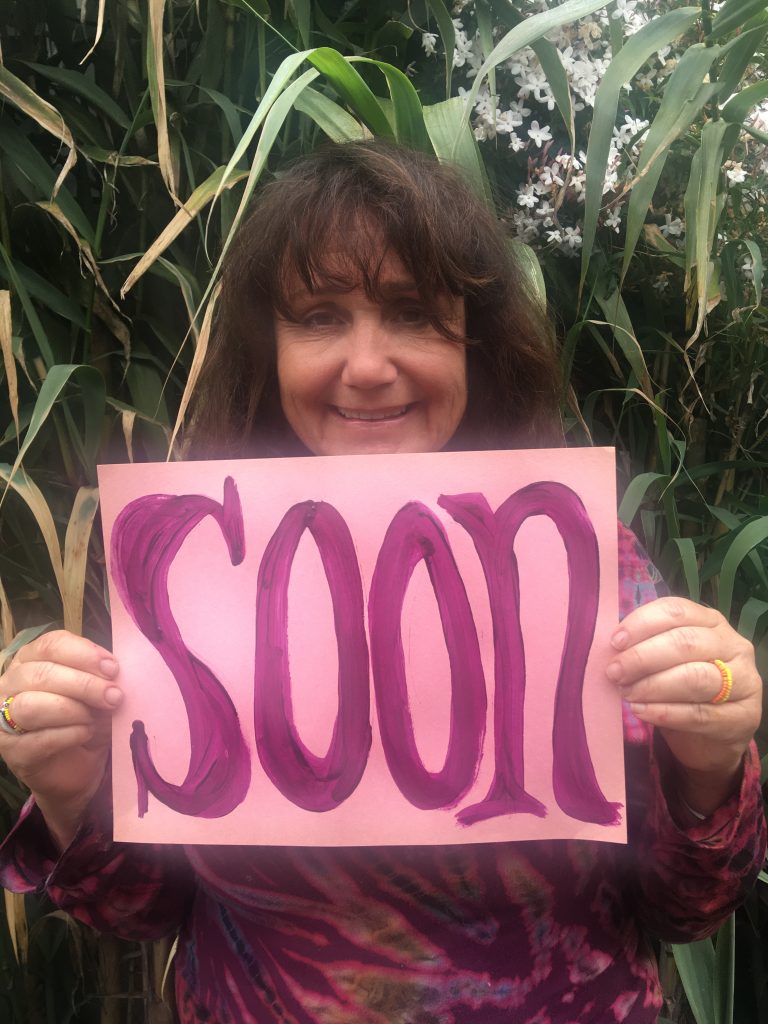
    The teachers were instructed to make one word signs, and take a selfie holding the sign. When the pictures were grouped together, it read “We miss you! We will see you soon.” I held the ‘soon’ sign. But we never saw the kids again that year, or the next. In fact, I never saw that group of kids at that school again.

  • Learning Loss Part 1

    Learning Loss:

    No one ever imagined that we would still be locked down in September.

    September means back to school. New backpacks and shoes for the kids, and we teachers sigh to say good bye to the summer, but there are fresh bulletin boards and ‘Welcome’ signs, new rosters, and classrooms that had the floors polished in the summer. September meant new beginnings, new kids, a renewed sense of purpose after resting all summer. 

    Not that year.  The schools had been shuttered since the March before when they told us all to go home.  ‘I thought it was Easter, not Christmas, I heard a teacher whisper when the principal told us our spring break would be extended another week, to two weeks, to you know, ‘flatten the curve’.  We all know the story now, yadda yadda, the kids of California never went back to the classroom that year.  Nor the next.

    I spent the last half of the 2020 school year sitting on the school yard asphalt by myself, surrounded with buckets of paint.  Most teachers had to start Zooming, but since I taught ESL that year, they told me I could just go home and collect my paycheck. The thought of getting free money for doing nothing was unfathomable to me (but I guess a lot of stuff that happened that year was) but also immoral, so I asked the principal what else I could do to help.  She gave me the perfect job of painting a giant map of the United States on the playground.

    I sat, day after day, month after month alone, painting each individual state in a color palette of my choosing, my headphones on my head tuned in to Adam Carolla, the comedian I had listened to in the morning for years. He was a voice of sanity to me, my friend. 

    School officially ended that June along with my temporary job.  Painting the map of the states had inspired me to drive across this country of ours.  I wanted to see with my own eyes what was happening everywhere else.  I was prepared to drive alone, anything to get away from the irrational craziness I saw when I wasn’t in the refuge of my asphalt canvas.  I couldn’t bear to continue to witness the lines of masked people bracing themselves against the wind to get into the grocery stores, or physically fighting over toilet paper once they got in.  I had to get the hell out of Dodge.  The fact that the unelected health officer, Scott Marrow, told us to stay within five miles of our homes made the trip even more enticing. It couldn’t be like this everywhere.  My friend Merry ended up going with me.  ‘What if we die?’ she asked me before we left.  After all, we were going into the eye of the storm, the scary states that didn’t lock down, where covid floated in the air like a thick invisible blanket, they told us, where faces were obscenely seen because of the lack of masks. “Then we die,” I said.

    We didn’t die, and I was right.  The rest of the country wasn’t like us.  They all went back to school in September, rightly seeing the insanity of keeping kids at home staring into a computer. Not California. The 2020-2021 school year was upon us, and Newsom told us the schools were not opening, we had to continue to stay home to save lives.  Remote learning they called it. It was a joke.

    I didn’t know what I was going to do, but like the school year before, providence handed me the perfect job during that second Pandemic Lockdown School Year.  A one-room school house out in the country, as though my classroom was a cross between Little House on the Prairie and Charlotte’s Web, in a rough-hewn wooden barn.

    One wall had a white board where I kept track of the fourteen kids complicated Zoom schedules, another wall had horseshoes nailed into it in such a way that the students could hang up their backpacks and coats, another wall I covered with the kids artwork, and the fourth wall was non-existent.  Like, there wasn’t one, the barn had three walls.  That meant that I had an unobstructed, open-air view of the rolling hills, dotted with horses separated by white ranch style fences, and the smell of fresh hay and manure wafted around my classroom.  The en plein air classroom was a draw for some of the parents of the students that ended up being in my ‘learning pod’ one of the pandemic concepts already fading from our collective memory, where it was said that a random number of kids, say a dozen or so, could be together and it was ‘safe’ especially if air was circulating, and boy did the air circulate there!  Most pods had to buy HVAC systems, but ours was natural.  As beautiful as a semi-outdoor classroom was, it also meant that many mornings were freezing cold, and getting the propane going on the one heater we had wasn’t always easy. Also, since we were on a dirt road, clouds of dust would float in and settle on everything whenever a car or horse went by.

    I’d gaze out at the hills and horses and tell the kids that ranged from kindergarteners through fourth grade, that they were the luckiest students in the whole state.  ‘Whoever gets their math done can go on the hayride!’  was my daily refrain meaning that some lucky kids got to ride around the ranch in the quad with Breen, my stepson, and owner of the Lazy H Ranch, and throw flakes of alfalfa in the feeding troughs. 

    One corner of the barn had eggs in an incubator at the beginning of the year, and as the months went by, we watched the chicks hatch and eventually turn into four rust-colored teenage hens.  The chickens were like our kids that we had raised.  They wandered freely around the classroom clucking softly, and some of the kids liked to hold one of them in their lap grounding them to reality while they watched their teachers trying to explain math on their laptops.  The two barn dogs guarded us, but one always was licking his chops around the chickens, and the kids would scream at him to get away, until one day the dog came in the barn and I literally saw feathers come out of his mouth, like a cartoon.  We didn’t tell the kids for days that he ate one of the hens, and I privately cried.

    After ‘school’, we’d all go up to the hay loft and watch movies on a TV, and some of the kids would jump out the opening holding a rope, and land in the pile of soft hay below.  Two giant tire swings hung in the trees further up the hill, a thrilling ride where up to four kids could comfortably sit and spin dizzily around holding on to the thick chains. The kids all got riding lessons on ponies in the coral for their afterschool program.

    I was in an idyllic world, far from the ugliness of the lockdowns and people’s reaction to them. No television blaring propaganda, no radio to tell us to be scared. All it took was a mile or two to get out of town and completely change my reality into that of country living in the old days.

    The Zoom teaching made me sad though. The Chromebook laptops were the worst part. I remember the sight of one kindergarten girl named Steele diligently doing jumping jacks solo out in the courtyard behind the barn for ‘P.E.’ while staring at the computer.  A long-awaited annual fourth grade field trip to the Sanchez Adobe was watched by the kids on the computer while they pretended that they were making the mud bricks they usually got to make with their hands. Breen’s son, Chinny, in his senior year, wandered in and out of the barn.  He usually stayed in bed until noon, watching his high school classes on his phone in bed.  He missed most of his long-awaited football season, his prom, and his graduation, although the moms tried the best they could to make facsimiles, it wasn’t of course the same, the sadness was obvious in his eyes.

    I was privy to see how more than a dozen teachers interpreted ‘teaching’ during the lockdown.   I saw some teachers showing up over the Zoom every day, well, actually only four days a week, because they called Wednesdays ‘asynchronous learning’ a euphemism in the New Speak that meant ‘you’re on your own kid, and yahoo, the teachers get a day off’.  Other teachers just directed their kids to watch videos, and sent home thick packets of busy work.  I heard one kindergarten teacher tell the kids to go outside and observe nature for their science lesson.

    That school year went by like I was in a dream.  At the beginning, in September, we survived the ‘black day’ when the smoke from the fires was so thick the sun never came out, by hiking up to the ridge with flashlights, and watched the traffic below, the headlights barely visible. We made applesauce and carved pumpkins, and Santa and the Grinch made surprise appearances at Christmas.  In the spring we planted flowers in decorated pots for Mother’s Day, and at the end we held a formal graduation, complete with graduation caps that the kids made themselves.

    The horror of what the lockdowns did to most the kids didn’t hit me until the following school year.

  • On Forgiveness

    images

    One moment of true forgiveness can erase years of guilt, pain, or fear.  – Alan Cohen

    On Forgiveness

    “Forgiveness is the fragrance that the violet sheds on the heel that has crushed it.” Mark Twain

    You hear a lot about forgiveness these days. Forgive, and not necessarily forget, but rather forgive and Let Go. Lesson Number 122 in A Course in Miracles tells us that “Forgiveness Offers Everything I Want.” That’s a mighty big claim. Really? Everything?

    I know that the person holding a grudge bears the burden, not the object of his or her bitterness. I know that if we forgive others, then we will be able to forgive ourselves.

    But some people are easier to forgive than others.

    Not that I’m an expert, but I have at least passed Forgiveness 101. I’ve barreled through forgiving my parents, (they did their best) my siblings, (ditto) the government, (they can’t please everyone) nature, (there must be reasons) God, (she’s smarter than me) all my Ex’s, (it takes two to tango) and myself (we all succumb to ego and insecurities). But there is one person I can’t forgive completely yet, and that is my last boss. Maybe someday, I will. Maybe never.

    It is hard for me to admit that I don’t want to forgive her. Not wanting to forgive makes me mean and judgmental, makes me decidedly spiritually un-PC, but it’s not so much that I don’t want to forgive, but rather that I’ve been hurt, and forgiving her would mean I was letting her off the hook, or saying that what she did was okay.

    On my 25th year of successful teaching, The Universe catapulted this woman from faraway lands and dropped her off in the tiny California town I have called home most of my life. At the same time, The Universe led me to the back by my best friend’s farm, near the fields I have frolicked through since I was a little girl, to discover a seemingly idyllic, little blue private school nestled in the back of town. It was at this very spot that the paths of my boss and I were destined to cross. This is the intersection is where The Universe decided to give me my graduate work on Forgiveness.

    I had made the hard decision to leave my guaranteed tenure and pension in the public school system and the Test Taking Factory it had become after Bush decided to Leave No Child Behind, to ostensibly finish out my career in this outwardly tranquil little school, a short bike ride from the house I have lived in all of my adult life.

    I had three bosses in three years. Boss One, saying how he liked my art projects and the Beatle music I played, told me to keep doing what I was doing. Boss Two, old and Wise, laid back and mellow, mostly talked to me about the Body Pump weight lifting classes we both attended before school. The third year, enter Boss Three, who fired me.

    Right off, her name made me mad. She introduced herself to the staff with all eleven syllables of her impossible to pronounce name, including the somewhat pretentious title she tacked onto the beginning, and the hyphenated one syllable of her husband’s last name on the end. We all sat in silence trying to digest this name until someone reasonably asked her what she wanted to be called. She simply repeated this tongue- twister of name in her clipped British accent.

    The lack of a pronounceable nickname gave me the message that she was going to keep her authoritative distance, and when she set up her new office way down the hall from us, far from the front office near the entrance of the school where my other two bosses sat, my hunch was confirmed. She was inaccessible.

    She might have known this about herself. That’s maybe why she tried to counter the problem by telling us over email, to ‘pop into her office anytime for some hot tea.’ The problem was, if you had the time to make the long trek down the hallway to the other end of the school and peek into her office, she was never there.

    I know one way to meander over to that place of Forgiveness is to find ways that you are like your perpetrator. Find common ground. They lied to you… have you ever lied? They cheated on you… have you ever cheated? Ok, her name made me mad.  My name makes me mad!  I have ten hard-to-pronounce syllables on my birth certificate name. But I changed it! I shortened it! I Americanized it! I didn’t tack on titles or my ex-husband’s name! I don’t make people try to memorize it!

    But you know, and so do I, that focusing on this name business is all superficial fluff and distraction for what the real problem is. This boss was unapproachable, remote, and her soul difficult to get to. And in many ways, though this is hard for me to admit, so am I, and so is mine. Perhaps the Universe brought together two women with two opposite personalities,  each of which was carefully developed to keep up the wall they had built around their hearts, and to keep that wall strong and fortified.

    Maybe here, at the meeting of these two barricaded hearts, is where the Universe saw an opportunity for learning.