Tag: Covid Times

  • Shelter In Place

    Only a few days in, I knew the whole covid thing was a lie.

    Not that there wasn’t a virus, I was one of the first people I knew who got it.

    I’m not some grand prognosticator, it’s just when you grow up with lies, like in my case where they told me that my younger brother was my uncle, among other things, you get really good at sniffing out the Truth. Or at least that’s the case with me. Some call it hyper-vigilance.

    My early tip off was three little words: Shelter in Place. If not for the fact that I’m an elementary school teacher in California, I might not have known exactly what that meant.

    Friday the 13th in March of 2020, was the last day that I saw kids at school; playing in the playground, tumbling and touching, laughing with their heads back and mouths open wide, for a long, long, while. Spring break was only a week away, and spring fever was hitting hard. The kids didn’t feel like working, and neither did I. Ms. K, the principal, called us into special meeting that Thursday after school in the library. I was thinking, really? Can’t you just send out an email or something? An extra meeting was the last thing I wanted. On the other hand, it wasn’t too often a special meeting was called, so I was somewhat intrigued.

    “The students are not coming to school next week,” she told the assembled, tired-looking teachers, scanning the room for reaction. “We are being told to close an extra week out of an abundance of caution, so that they can get a handle on this virus that is going around.”

    At first I thought she meant because so many kids at our school had been sick. Lots of kids had been sniffing and coughing right in my face, and wiping ribbons of snot on the back of their sleeves. I had been working with kids one-on-one on a computer for English proficiency, and had to keep wiping down the screen and keyboard that was sprayed with sneeze spittle. But closing the school just because some kids were sick? That was unheard of. They don’t close school for anything, as much as I wished we could have a snow day or something once in a while, but no such luck in California.

    The room full of teachers sat for a full minute of stunned silence trying to digest this news. Ms. K continued, “Governor Newsom has ordered all the schools closed in the seven Bay Area counties, due to the spread of the Corona virus.”

    Oh, that? Sure, I had heard of this Corona virus in the background of my busy days, the guy who died in China, the three or however many cases they had detected in the US, mostly by people who travelled to China. I remember people being scared to go to the Chinese New Year parade in San Francisco that past February, but I thought that was ridiculous hype, and went anyway. I had heard that a State of Emergency had been declared, but I thought, yeah, yeah, that’s how they get money. None of the talk meant anything to me until I heard Ms. K say they were going to close the school. All the schools in the Bay Area. For a week!

    My first guilty thought: we don’t have to teach next week! Yahooo! And then we still get another week off for spring break? Two whole weeks without the kids, an extra week off? I think I can speak for most teachers when I say that while I love teaching kids, the job is, let’s say, taxing. I adore kids, more than adults, but at that point in the year the extra break was welcome. I could feel this somewhat verboten thought ping-ponging around the worn-out, spring-fevered, teachers’ brains in the room. Though most sat stoically stone-faced, no one would admit the glee I think we all felt until I heard a teacher behind me whisper, “What, is this Christmas? I thought it was Easter!”

    “You will all need to report to work next week,” Ms. K went on. “We will need you to help gather materials for the students to use during the extra week they will be at home. Although the kids will not be required to come to school, they will still be considered instructional days.”

    Anybody who is a teacher knows that any kind of “work” that doesn’t involve trying to wrangle kids attention, inspire them to learn, keep them following the rules while fostering and independent spirit, making them laugh, consoling their injuries, and loving them at the same time is not work. Any kind of task on a computer screen, or talking on a phone, or doing something menial, does not compare with the spiritual and emotional effort required to turn a classroom of kids into a cohesive community. So, whatever we teachers were going to be required to do the next week felt like an unexpected vacation.

    After we were dismissed, some of the teachers buzzed in corners, and a couple of teachers in the principal’s inner circle went up to talk to her in low voices. I thought I heard her say, “Yeah, I don’t think they’re coming back at all this year.” I thought I must have heard that wrong, and put the thought out of my head as being too impossible to fathom. Only later did that overheard remark come back to haunt me.

    The next day, on that Friday the 13th there was a palpable grief floating through the kids’ collective psyche, while we teachers were temporarily psyched up. They had definitely gotten the memo about the extra week off, but I was surprised to see kids crying here and there, some clustered in small groups, their arms around each other, heads down. Kids came up to randomly hug me. It felt like a funeral. Actually, it was, but I didn’t know it yet. The kids seemed to intuit what was happening though. “Aw, come on, it’s only a week,” I said to whatever kid was acting overly dramatic, as kids tend to act.

    Monday morning, we teachers all reported to an eerily empty school void of kid-noise and energy. The bells rang anyway, signaling nothing. We were told to go through the desks in all the classrooms, and start making packets of work that the parents would later pick up. I set to work in various rooms, putting crayons in baggies, and making stacks of work and books, and packing and marking them in paper bags. About half way through the day on Tuesday, I heard Ms. K make an announcement on the loudspeaker. “Everyone is to go home. Now. Please just drop what you are doing. The governor has announced a Shelter in Place.”

    I was like, what? Shelter in Place?

    I knew what that term meant, as most teachers do, because ‘Shelter in Place’ was one of the many emergency drills we practiced with the kids every year. Fire drill, evacuate the building, earthquake drill, get under the desk, unfortunately in later years, ‘active shooter’ or lockdown drill, close the curtains, lock and block the door, and keep quiet. Shelter in Place meant do not evacuate, immediately seek shelter in the nearest building or room, and if possible seal the windows and doors and turn off any air conditioning because of immediate danger outside. The danger could be some hazardous chemical material in the air, or else severe weather. Shelter in Place is a command that is only meant to last for a few hours.

    This is where the governor made a big credibility mistake with me, very early in the game, and I never believed another word he, or any other person in the government or public health said on the matter. Immediately my hyper-vigilant brain started rapid-fire spitting out questions as it tends to do, often to people’s annoyance. Like the evil covid germs were just floating around outside in the air? Invisible spiky red balls had permeated the atmosphere? Were we supposed to hold our breath on the way out to our car? Was everybody sheltering in place? And for how long? If there was imminent danger, why weren’t we sheltering there at school? And why only the Bay Area?

    I went to talk to Ms. K, being mindful to only ask a fraction of my zillion questions.

    I remember asking her if the gas stations were open because I didn’t have enough to get home. She told me they were, and right then I thought, if we have to Shelter in Place why didn’t they? Were they risking their lives? I left the school in a daze. Not scared, just dazed and confused. I tend to get slow and calm in emergencies. Driving home I looked around outside, observing, and thought that everything looked remarkably normal. I didn’t see people dropping dead in the streets like they showed in those fake Chinese YouTube videos. I saw cars driving, some people walking around, kids playing. I stopped and got gas; the workers seemed non-plussed.

    That’s when I knew they were trying to scare us. That’s when I knew it was all hype. Everything after that day of the ‘Shelter in Place’ announcement only confirmed my suspicions. That the government would outrageously lie to the people, did not surprise me. I grew up not trusting the government since I was a little girl with my semi-hippie parents, who sent me to school with a black arm band to protest the Vietnam war, and pointed out the flag-covered coffins of drafted teenagers coming back from Vietnam on our little black and white TV. ‘Question Authority’ was a prominent bumper sticker back then, and all the rock n roll heroes confirmed that you should never “trust the man” or the guys in suits. ‘Fuck the establishment’ is what I learned early on.

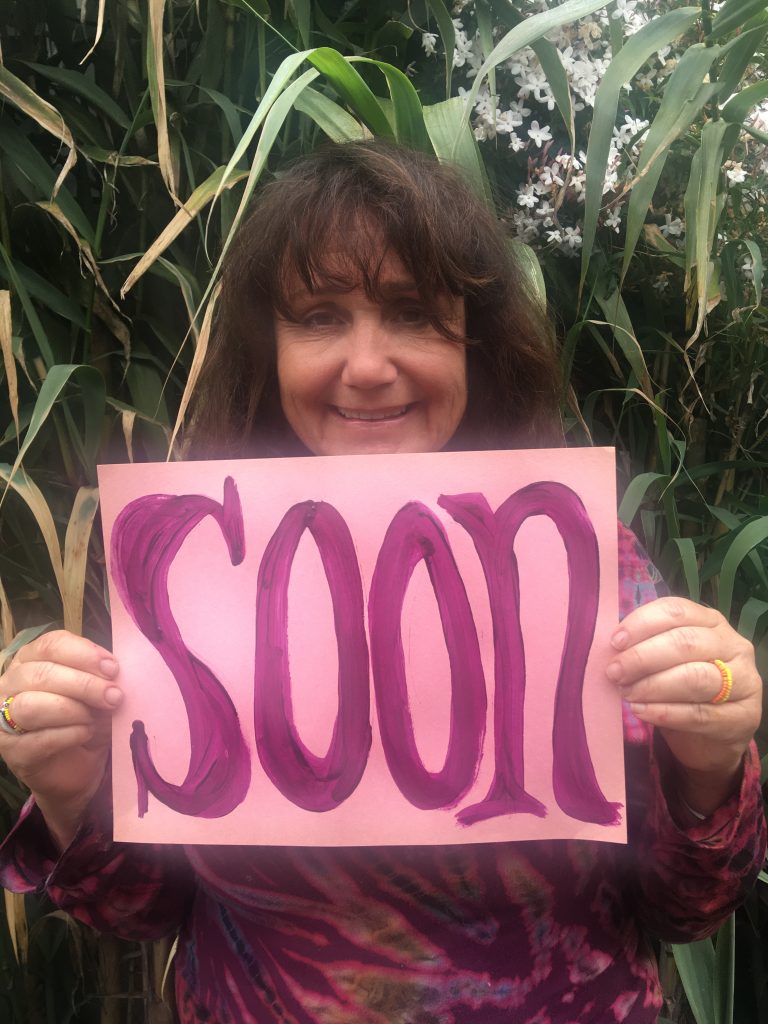
    The teachers were instructed to make one word signs, and take a selfie holding the sign. When the pictures were grouped together, it read “We miss you! We will see you soon.” I held the ‘soon’ sign. But we never saw the kids again that year, or the next. In fact, I never saw that group of kids at that school again.

  • Goodbye Pumpkin Fest!

    All good things must come to an end, and somewhat sadly, the party is . . . over.

    The Pumpkin Festival as we knew it, has, in my opinion, officially died. R.I.P. P-Fest! Bye-bye, so long, farewell! But as some people believe, the Spirit stays alive long after the body dies.

    The cause of death has been under dispute. Mr. Eblovi stated in The Review that “the unvaccinated” were responsible, a claim so ridiculously ludicrous, (as well as divisive and mean-spirited) that I won’t even bother trying to refute it. Another longtime local and occasional contributor to this independent journal tried, citing facts and studies, but his piece was ignored.

    To some, it might look like Pumpkin Festival died of natural causes. After all, it was getting old, big, and crowded, and it could be said that the festival was on its way to imploding. With the proper interventions, the festival may have overcome these problems and gone on to live a long and happy life, but unfortunately The City killed the festival a couple of years ago, in the name of public safety.

    Many may not understand the soul of The Fest, a phenomenon that grew out of the spirit of the people of the coast back then. The Coastside was a tight community of rowdy, feisty, and sometimes bawdy individuals who looked out for their own. ‘Our own’ meaning our community, all members, regardless of race, gender, or political affiliation. When Bev had the idea to fix up Main Street, everyone chipped in, and it was a party with live music and the Coast turned out en masse to literally paint the town with the proceeds of Fest.

    I was at every single P-Fest. The first Festival, in the basement of my friend Marcia’s house, the Old Montara School, some don’t count as official, but I was there as a kid, painting rocks and selling them for a quarter. The next one, that counts as the first, was in the grounds of the IDES only, and I went to see my dad, Ray Voisard, and his friend Dick Hazel, who had set up their paintings and were enjoying a casual afternoon showing the local artwork and drinking cocktails.

    From there, the P-Fest grew, and during those young, heady, expanding years I had so much fun celebrating our town, back in the days when ‘living life’ was more valued than safety. All of us locals would watch in amazement as the line of cars snaked their way over 92. All these tourists were coming here? To our little town? It was an anomaly, a once-a-year inconvenience that we loved, after all, we were hospital folk, and welcomed these occasional visitors with open arms.

    One year, early on, I sold my dad’s famous “Italian Sandwiches” salami and cheese, wrapped in red gingham cloth, for a dollar, and my friends and I had people lined up from the IDES building out to Johnston Street. I had “LOCAL” printed up on the back of the official Festival tee-shirt and skipped through the streets meeting up where only the locals knew to go: to the costumed Fireman’s Ball in the IDES hall, in the back of the Bakery, behind the beer booth, or up in the graveyard. We would watch the bands play for a bit at the grounds in the morning, but then end the day at The Inn or San Benito, people sitting in the windowsills, overflowing to the street, live music still going, tipsy people in costume, dancing, kissing, and cheering the tourists trying to leave town. We wouldn’t bother trying to go home until the town was once again quiet.

    But then.

    Well, I guess you have to start adding some rules, but once all that regulation and signage arrives, the spirit starts leaving. The yellow tape and temporary fences, the cops in the street directing people when to cross, and rules, and more safety, and eventually the Festival was becoming a large, unmanageable vessel. I was sad when some locals started leaving town that weekend to avoid the madness.

    Two years ago, is when one more intervention, one more stab at control by the City, was the straw that broke the proverbial camel’s back, and the Festival was killed. Because of a shooting that had happened in Gilroy a few months prior, The City thought it would be a good idea to have the sheriffs dress up in army camouflage and stand on the roof of City Hall with automatic rifles during the beloved Parade full of kids in Halloween costumes, which the City abbreviated to five minutes. The faux military with body armor stood around the streets afterwards with a giant SWAT kind of tank vessel thing. Not exactly welcoming.

    And so, the Pumpkin Festival died.

    They tried to hide the death last year, and lucky for those now in charge, the pandemic restrictions gave The City good cover. Then this year, after having given the go-ahead to a one-day event, The City once again rubber stamped a big red ‘No’ on the Festival because of what they said were safety concerns, a common thing the government is doing lately, exerting power under the guise of health.

    It is common knowledge that there is little to no evidence that this virus is spread outdoors. Large outdoor gatherings are once again happening all over the Bay Area, the most restricted area in the country when it comes to rules based on the pandemic. It’s probably a good thing they put a kibosh on the planning, because the The City, who knows how to make rules but not how to throw a party, wanted gates put up, and proof of vaccine to enter, which would have been a buzz kill on par with the cops with AR15’s.

    So, our large and unruly Pumpkin Festival was killed in the name of Saftyism. I don’t believe our City Council were sad to stop the party, as they claimed, since they have shown very little support to local businesses during the past year and a half.

    But the undying Spirit of the true Coast lives on!

    Last year, like the citizens of Whoville when the Grinch tried to steal their Christmas, some of us carried on as usual. I had my traditional breakfast at my house, another home hosted the bakery tri-tip sandwiches, and another house hired truck full of pumpkins to come for the kids and fired up a juke box and a bubble machine. We hiked to the graveyard at night and told stories of Pumpkin Festivals Past. In some ways, it was more fun than what the P-Fest had become.

    I’m going to count last year as the First year of a new Pumpkin Festival that has grassroots and will grow from the ashes. This year, coming full circle, and the locals are having the fest in the grounds of the IDES, despite the City, just like the first year, a long time ago. Long live the Pumpkin Festival


  • Twelve Years Ago I Visited China

    Twelve years ago I visited China.

    I was teaching ancient civilizations to middle school kids at the time. When I saw the photo of the terra cotta warriors in the social studies textbook, I was blown away that such a spectacle could exist. Several football fields full of life-sized armies of clay soldiers, horses, musicians and acrobats, each with an individual face, had been unearthed in 1974, I learned. I vowed to someday see these statues in real life. When serendipitously I heard of a group that took teachers to China for a two-week tour for free, I jumped at the chance.

    I was a little in love with China back then.

    It was the time in my life when I starting to explore Buddhism and meditation, so teaching sixth graders about China fishtailed with my own interests. I loved the philosophy of Confucius. The yin yang symbol was cool and popular at the time, plastered on skateboards or dangling from earrings, and I loved learning the real meaning of the light side of the hill and the dark side, and how both were inherent in everything. I loved The Tao of Pooh, and started studying the Tao in earnest. I started going to an acupuncturist if I felt bad, or even if I felt good. I loved Chinese calligraphy and watercolors, and started taking classes to learn the art and the meditation of their pictographs. I painted the Chinese symbol for love in my bedroom. I got my first tattoo, the Chinese symbol for truth, on my ankle.

    I was excited when I learned about our whirlwind itinerary. The group of twenty teachers would visit Xian, the sight of the warriors I wanted to see, as well Beijing. We would go on a cruise down the Yangtze River and see the Olympic stadium, a Chinese ballet, the Great Wall, and a whole host of activities the first week, and the second week we would study the history and culture of China in order to bring back information to our students. We would be required to take Chinese lessons online before we went, way before Zoom was ever invented. In order to have our trip paid for, we were required to be observed teaching lessons regarding the trip to our class upon our return.

    After my visit, I hated China, and vowed never to return.

    I realized early into the tour that entire two-week trip was nothing more than a giant propaganda brainwashing of us teachers, so we could take their views back to the states and indoctrinate our students. The first week we were treated with luxury, including five star hotels, the finest cuisine of each region, the touring of the best schools, evening entertainment, and a cruise complete with a doctor cupping us. The pace was such, that we were exhausted and satiated, with little time to think. Week two found us in barrack like dorms, where we attended class every day to have the history of communist China rewritten for us from their perspective.

    I could feel the presence of Chairman Mao and his authoritative government everywhere I went. We were taken to bookstores where our guides took notes on what we read. In Tiananmen Square no mention was made of the protests or the protesters that were killed. We saw how the highways we traveled were beautifully landscaped with fresh flowers to impress us, but I could see the slums and shanty houses right beyond. The high school we visited was brand new, and apparently state of the art, but so shoddily and hastily built that the crumbling walls and leaking roofs were plainly apparent. We visited a museum that boasted of China’s environmental program and initiatives, but the sky outside, that we saw with our own eyes, was never blue, only a sickly yellow. We saw where the Yangtze River Three Gorges dam was built, and how the government had no problem flooding the shores, displacing millions of farmers, and destroying ancient temples and artifacts. Although we visited one Buddhist temple, our tour guides told us that religion is frowned upon, because the more important focus of all the people was making money.

    I tried to talk one-on-one to the guides as much as possible, but they were tight lipped. I asked them about Google, and if they knew that their information was being censored. I asked them if they believed in God. I asked them if they minded giving up their kids, and only seeing them once a month in order for them to do their jobs. I asked them why people weren’t allowed kiss in public.

    I wondered why people in hazmat suits with face shields and helmets took our temperature with those little guns on all our plane flights. I thought everyone was wearing masks because of the smog, but no, a flu was going around, but I had never heard of it, and when I got home I was in bed for two weeks with the only case of the flu that I have had in my adult life. Only then, did I learn about H1N1 or the term ‘Swine Flu’.

    The virus had followed me home.

    And now it’s back. Everything I hated about China, the censorship, the authoritarian regime, the brainwashing, the fake news, the propaganda, the whitewashing of bad truth, the illness, the masks, the distancing, the smoky yellow sky, the lockdown, the rewriting of history, the focus on money, the discouraging of gathering and religion has permeated American soil. It’s all here, along with their new ugly virus. The shocking part to me is how Americans so easily succumbed and even embraced, the ways of China.

    I am glad I saw those Terra Cotta soldiers up close.  The magnificence of the vision of this guy Emperor Qin, or Ch’in, who had them built in his honor, (and of whom China is named after) was something to behold. The grandeur of this ruler’s vision, and his attention to detail, is what enabled him to implement his authoritarian rule over the vast land. But eventually, his well thought out means of controlling people ended when rebellion erupted.  People can only be held down for so long.